
There’s a certain kind of resilience that only a Delhi fan understands. Supporting Delhi Capitals (formerly Delhi Daredevils) isn’t about glory—it’s about hope. Year after year, season after season, you show up knowing the script hasn’t changed much. Meanwhile, your friends celebrate titles with Mumbai Indians and Chennai Super Kings, or rally behind the ever-loyal Royal Challengers Bangalore. And you? You wait.

But loyalty in sport isn’t built on trophies—it’s built on belief. And yet, after 18 years, the question remains: why hasn’t Delhi won the IPL?
A Franchise That Let Its Stars Become Legends Elsewhere
Delhi’s biggest paradox is this: they’ve had some of the greatest match-winners in IPL history—just not at their peak.
Think about this lineup:
Virender Sehwag
Gautam Gambhir
AB de Villiers
Andre Russell
Trent Boult
David Warner
Kagiso Rabada
Rishabh Pant
Shreyas Iyer
That’s not just a good squad—that’s a championship core. Yet, the common thread? Many of them achieved their greatest IPL success after leaving Delhi.
Compare that with how franchises like CSK and MI operate. MS Dhoni, Rohit Sharma, and Virat Kohli have been the pillars of their teams for years. Stability breeds success. Delhi, on the other hand, has often hit reset at the wrong time.
You could call it bad timing. Or you could call it short-sighted management.
The Retention Problem: Delhi’s Achilles Heel
If there’s one area where Delhi has consistently lagged, it’s squad retention.
While successful franchises build around a core, Delhi has often dismantled theirs. Players were released just as they were entering their prime. The result? Other teams benefited from Delhi’s patience—or lack of it.
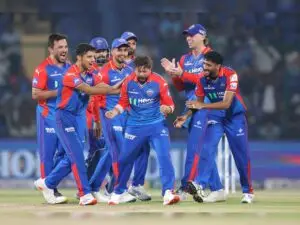
Retention isn’t just about keeping talent; it’s about building identity. CSK has Dhoni. MI had Rohit. RCB has Kohli. Who has Delhi truly built around for a sustained period?
Every few years, Delhi felt like a new team trying to rediscover itself. And in a league as competitive as the IPL, instability is the fastest route to mediocrity.
The Kotla Conundrum: A Home That Isn’t a Fortress
Home advantage is supposed to be sacred in cricket. But for Delhi, Arun Jaitley Stadium (the Kotla) has been anything but.
Unlike venues that offer clear identities—spin-friendly tracks or pace-friendly bounce—the Kotla has often been unpredictable. It doesn’t strongly favor bowlers or batters, making it incredibly difficult to strategize.
And in T20 cricket, where margins are razor-thin, that lack of clarity can cost you games.
Ironically, what should have been Delhi’s biggest strength has often turned into a neutralizer. Visiting teams don’t feel intimidated. Delhi doesn’t feel at home. And matches slip away in the chaos.
Timing, Identity, and the Missing Edge
Delhi’s story isn’t one of lack of talent—it’s one of misalignment.
They had stars, but not at the right time.
They built squads, but didn’t sustain them.
They had a home ground, but no home advantage.
For a long time, Delhi felt like a team in transition—every single season.
Final Thoughts
Hope Still Lives
And yet, despite everything, Delhi fans return.
Because sport isn’t just about winning—it’s about the possibility of winning. The belief that this could be the year. The idea that one perfect season could erase years of heartbreak.
Maybe the story of Delhi Capitals isn’t about failure.
Maybe it’s about patience.
And when that first trophy finally comes—it won’t just be a win.
It’ll be 18 years in the making.